
Which Emulsifier Should You Choose?
In the food industry, emulsifiers are essential additives used to ensure the consistency and stability of finished products.
Their primary functions include delaying starch retrogradation, creating a soft texture, and improving heat resistance—effectively performing the functional role of fats in various formulations.
To deliver high-quality products to consumers while enabling efficient production processes for manufacturers, which emulsifier is the right choice?
⸻
⚙️ The Most Widely Used Emulsifier in the Food Industry: Monoglycerides
Monoglycerides are among the most commonly used emulsifiers in the food industry.
However, under the growing clean-label trend, their application has become somewhat limited due to a perceived artificial image.
In contrast, lecithin has gained significant attention as a naturally derived emulsifier that aligns well with clean-label requirements.
⸻
✅ Key Characteristics of Common Lecithin Sources
The most widely used lecithins—soy, egg yolk, and sunflower—offer distinct functional properties depending on their source.
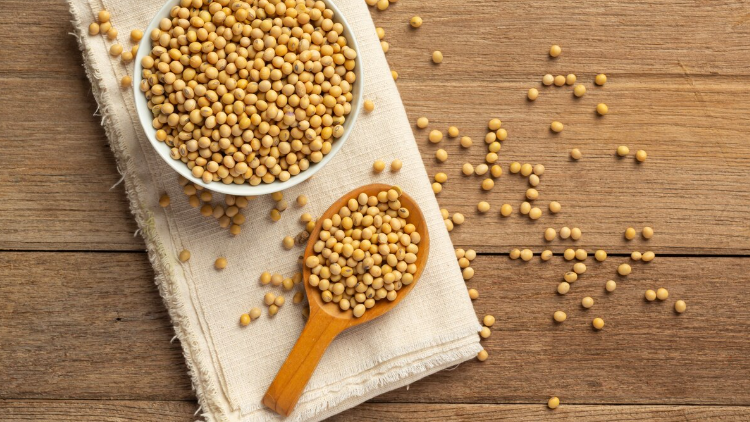
Natural Emulsifier: Soy Lecithin
🟢 Soy lecithin is widely preferred due to its abundant global production and stable supply availability.
In addition, soy lecithin presents significantly lower risks of allergen concerns and microbial contamination. Compared to higher-priced sunflower lecithin, it is more economical, making it highly suitable for large-scale use in the food industry.
Powdered soy lecithin is a naturally derived, versatile emulsifier used across a broad range of food applications. It can be considered a well-balanced additive with minimal disadvantages in terms of allergen management and cost efficiency.
⸻
- Excellent Emulsifying and Stabilizing Performance
It creates smooth and uniform textures in products such as chocolate, dressings, confectionery, bakery items, and ice cream.
⸻
- Cost Efficiency and Suitability for Mass Production
Soybeans are widely cultivated worldwide, ensuring a stable raw material supply and competitive pricing.
Soy lecithin is well suited for industrial-scale food production and offers excellent processing efficiency.
⸻
- Safe and Naturally Derived
As a plant-based ingredient, soy lecithin is safe for human consumption and has a relatively low environmental impact.
It aligns well with the growing Clean Label trend aimed at reducing synthetic additives.
⸻
- Multifunctional Properties
Beyond simple emulsification, soy lecithin also performs additional functions such as antioxidation, viscosity control, dough stabilization, and flavor enhancement.
BIF Lecithin Blended Powder
The lecithin blended powder supplied by our company is specifically developed to overcome the limitations of conventional powdered lecithin.
⸻
Key Advantages of BIF Lecithin Blended Powder
- Excellent Solubility
Engineered with precisely controlled particle size, our product ensures rapid and uniform dispersion in various applications.
⸻
- Smooth and Stable Texture
Formulated with sodium caseinate, it delivers a smooth mouthfeel and stable viscosity, enhancing overall product quality.
⸻
- NON-GMO Claim Available
BIF’s lecithin blended powder is manufactured using NON-GMO Indian soy protein, enabling clear NON-GMO labeling.
This makes it well aligned with the growing Clean Label trend in the global food market.